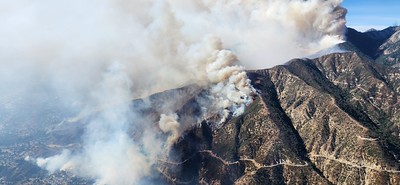
Thriving Communities in the Era of Climate Change
Thriving Communities in the Era of Climate Change
Course Information
About this Course
Fires, floods, droughts, and diseases - all phenomena that are increasingly impacting people and ecosystems around the world. This course gives you a clear understanding of climate-related threats to lives and livelihoods - and ways to address them while improving quality of life. Learn about the science behind current and projected climate impacts, and how people are adapting and building resilience to this new normal. Lastly, dive into urban planning to understand how people have constructed their environments - and how they can be adapted to be more resilient, less harmful, and better to live in.
What you'll learn
- Understand the scale of current and anticipated impacts.
- Evaluate adaptation strategies for human systems and ecosystems.
- Apply community-based approaches to building climate resilience.
- Explain why cities are important to climate action and how to design adaptable, thriving communities.
Modules
This course has 3 modules
Adaptation and resilience: Change is coming, so how do we help communities in need
Adaptation and Resilience: Part 2
City Planning: Building for a sustainable, healthy future
How you'll learn
 Real-World Learning
Learn from MIT faculty and experts who ground their teaching in real-world cases rather than mathematical models, making the material approachable for all.
 Practical Application
Apply your new knowledge with hands-on, practical exercises drawn from healthcare, sports, finance, sustainability, and more.
 AI-Enabled Support
Deepen your understanding of the course material and get help on assignments from AskTIM, the AI assistant built by MIT researchers.
 Stackable Credentials
Earn an MIT Open Learning certificate at each milestone—module, course, and program—demonstrating your AI expertise. Available in paid courses only.
Prerequisites
The program is designed for non-technical professionals and is grounded in real-world case studies and practical applications. No experience with climate science or engineering is required.
Meet your instructors
David Des Marais
Associate Professor of Civil and Environmental Engineering, MIT; Director of Parsons Laboratory
David Des Marais is an Associate Professor of Civil and Environmental Engineering. He received his BA in integrative biology from the University of California at Berkeley, in 2000, studying plant diversity and evolution, and a PhD in biology from Duke University. His dissertation addressed how multifunctional proteins evolve within and between species. Des Marais’ research interests are in plant ecophysiology, evolutionary biology, and functional genomics. He is particularly interested in plant interactions with the abiotic environment — water, temperature, nutrients, and light — and how plants respond when these factors impose stress. He studies natural diversity within and between plant species both in the field and in controlled environments, and he hopes to develop a mechanistic understanding or plant performance to conserve natural plant populations and to improve agricultural productivity and sustainability. (source)