Multivariable Calculus 1: Vectors and Derivatives
We live in a multivariable world. Explore the derivative in higher dimensions and learn how to apply it to solve real world problems. Part 1 of 3.
Course Information
About this Course
Variables are all around us: temperature, altitude, location, profit, color, and countless others. Multivariable Calculus is the tool of choice to shed light on complex relationships between 2, 3, or hundreds of variables simultaneously.
- How does one control a robot whose motion depends on several variables at once?
- How does an oceanographer understand carbon absorption of the ocean?
- How can one assess if a prediction model matches data optimally?
- How can one design policy to affect the behavior of consumers in order to better protect the planet?
All of these questions involve understanding vectors and derivatives of multivariable functions.
In this course, we begin our exploration of functions of several variables. We will start with learning to visualize multivariable functions, then move to computing and interpreting their derivatives. You will discover how to use linear approximations in several variables to simplify complex questions and will start to think about the world through multivariable dependencies.
Multivariable Calculus is a series of the following three modules:
- 18.02.1x: Multivariable Calculus 1: Vectors and Derivatives
- 18.02.2x Multivariable Calculus 2: Integrals
- Multivariable Calculus 3: Theorems and Applications (in development)
What you'll learn
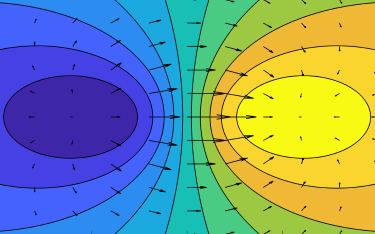
- How to visualize functions of 2 and 3 variables using level curves and level surfaces
- How to compute partial derivatives, directional derivatives, and gradients
- How to optimize multivariable functions subject to constraint equations
- How to represent the linear approximation of a multivariable function using vectors and matrices.
Prerequisites
Meet your instructors
Lawrence Guth
Claude Shannon Professor of Mathematics MacVicar Faculty Fellow
Larry Guth is a Professor of Mathematics at MIT. He received the Bocher prize from the American Mathematical Society and the Maryam Mirzakhani prize from the National Academy of Science. He works on problems in geometry related to isoperimetric inequalities and problems in Fourier analysis. He taught 18.02 four times between 2017 and 2020.
Areas of expertise: Metric geometry, harmonic analysis, extremal combinatorics